Overview
Since 1845, The Straits Times has captured and documented moments big and small in Singapore, adding to a large photo archive of the countryʼs transformation over the years. Now, in collaboration with Singapore Post to launch the nationʼs first lenticular stamp collection, four images have been chosen to showcase Singaporeʼs postal journey.
Then & Now – a feature by The Straits Times photojournalists on Singapore stamps.
FULLERTON BUILDING
For nearly a century, the building that now houses The Fullerton Hotel Singapore has overlooked the mouth of the Singapore River. Opened in 1928 as the Fullerton Building, this granite landmark once housed the General Post Office, famed for its 90m curved service counter, said then to be the world's longest. It was also known as "Mile Zero," the point from which road distances were measured.
During World War II it served as a military headquarters and a hospital. Later, it was home to key government offices, playing a role in Singapore's early nation-building years. Reopened as a luxury hotel in 1998 after restoration, it was gazetted a national monument in 2015.
THE POSTMAN
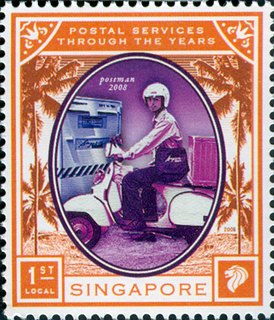
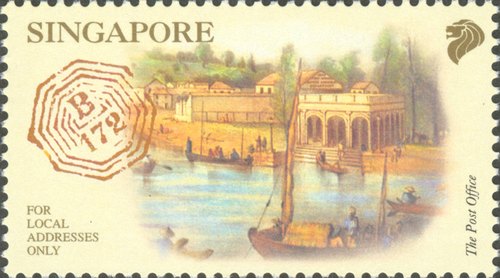
The history of Singapore's postmen began in 1819 with a single messenger working out of a small room near the Singapore River. In the early days, delivery was a rugged affair; postmen navigated muddy tracks and rural kampungs, often on foot or by horse-drawn carriage, to deliver mail that arrived by sea.
The profession modernised alongside the city, moving into the iconic Fullerton Building in 1928 and transitioning to motor vans and bicycles. While the force was exclusively male for more than a century, the first postwomen joined the ranks in 1974.
Today, while the job has shifted towards e-commerce and automated sorting, postal workers remain a vital community fixture, transitioning from the colonial-era "peon" to the modern logistics professionals of SingPost.

.gif.avif?itok=U47aHQ_Z)

.gif.avif?itok=I0l_NzM_)